You’re reading the label of a blood sugar supplement and you see it — Corosolic Acid , 10mg. But what actually is it? Where does it come from? And does it do anything meaningful for your blood sugar — or is it just a fancy-sounding filler ingredient?
Those are fair questions. This article answers all of them — in plain English, without the lab jargon.
Dr. James Parker, MD, PhD
Health Researcher · Supplement Reviewer
Published: June 2026 | 6 min read
What Is Corosolic Acid?
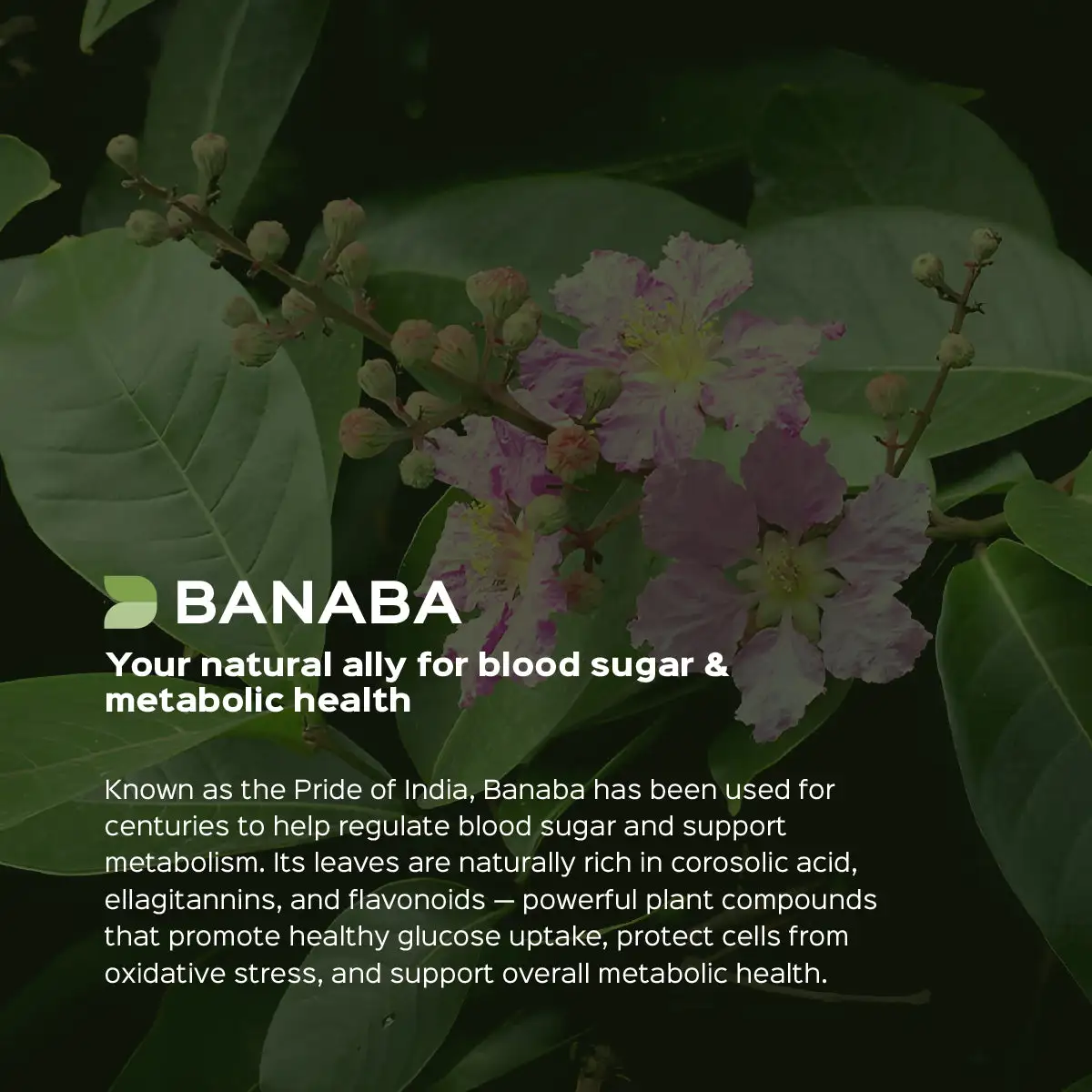
Corosolic acid is a natural plant compound found in the leaves of the Banaba tree (Lagerstroemia speciosa) — a tropical tree native to the Philippines, India, and Southeast Asia. When you see “Banaba leaf extract” on a supplement label, corosolic acid is the active ingredient doing the actual work. Everything else in the leaf is background.
Here’s the interesting part: Banaba extracts have been used for many years in folk medicine to treat diabetes, with the first published research study being reported in 1940. Filipino healers were brewing Banaba leaf tea for blood sugar long before any scientist explained why it worked. Modern research has now caught up — and it turns out the traditional use was onto something real.
Chemically, it belongs to a group called pentacyclic triterpenes — but you don’t need to remember that. What matters is that it’s a plant-derived compound that interacts with how your body handles glucose.
How Does Corosolic Acid Work?
This is where things get genuinely interesting. Corosolic acid doesn’t work through one single mechanism — it hits blood sugar from three different angles at the same time.
1. It Helps Glucose Get Into Your Cells Faster
Think of your cells as rooms with locked doors. Insulin is the key that opens those doors so glucose can enter. Corosolic acid activates cellular glucose transport and increases cellular glucose uptake, thereby lowering blood glucose concentrations. In simple terms — it helps keep that door more open, so sugar moves from your blood into your cells more efficiently. Less sugar sitting in your bloodstream, more energy in your cells.
2. It Slows Down Carb Digestion
When you eat carbs, your digestive system breaks them down into simple sugars using enzymes. Corosolic acid slows down some of those enzymes — impairing the hydrolysis of sucrose and starches. The result? Carbs digest more slowly, glucose enters your bloodstream more gradually, and you avoid the sharp post-meal spike that causes energy crashes and cravings about an hour after eating.
3. It Activates a Pathway That Improves Insulin Sensitivity
The beneficial effects of corosolic acid may be mediated by PPAR and other signal transduction factors. PPAR is a biological pathway involved in how your body responds to its own insulin. When this pathway is activated, your body gets better at using the insulin it already produces — which matters especially as we age and insulin sensitivity naturally declines. Think of it as improving the quality of the key, not just how often you use it.
What Does the Research Actually Say?
The research is more promising than most people realize — and more limited than some supplement companies want you to believe.
On the positive side: corosolic acid has been reported to decrease blood sugar levels within 60 minutes in human subjects. That’s a fast and direct effect. In a study of 12 subjects with fasting blood glucose levels greater than 110 mg/dL given 10mg of corosolic acid as a Banaba extract daily for 2 weeks, consumption reduced fasting and postprandial blood glucose levels by 12%. A separate study on 24 people with mild type 2 diabetes using a Banaba-containing supplement reported a 13.5% average decrease in blood glucose levels, with no adverse effects observed.
A 2025 review published in the European Review for Medical and Pharmacological Sciences — one of the most recent pieces of research available — concluded that both banaba extract and corosolic acid exert insulin-sensitizing, glucose-lowering, and lipid-lowering properties, with clinical trials confirming these effects in individuals with type 2 diabetes and prediabetes.
The honest caveat: most human trials have been small — typically 12 to 24 participants. Larger, longer randomized controlled trials are still needed before corosolic acid earns the same evidence level as established diabetes medications. The research is encouraging, not conclusive. And if you have diagnosed diabetes, corosolic acid in a supplement is not a replacement for your prescription — it’s a possible addition worth discussing with your doctor.
Dosage — How Much Is Used?
The dose used in most human studies is 10mg of corosolic acid per day, typically derived from Banaba leaf extract standardized to 1% corosolic acid content — meaning 1,000mg of Banaba extract yields 10mg of corosolic acid. Consistent daily intake matters more than any single dose, partly because corosolic acid has poor water solubility and a short plasma half-life — which is why supplements need to be taken regularly rather than just once.
Taking it with food appears to improve absorption. And one important note: corosolic acid almost never appears alone in supplements. It’s nearly always paired with other blood-sugar-supportive ingredients like Berberine, Chromium, or Gymnema Sylvestre — and the research suggests combining Banaba extract with other nutraceuticals may offer synergistic benefits in managing blood glucose.
Is It Safe? Any Side Effects?
For most healthy adults, corosolic acid appears to be well tolerated. No adverse effects were observed in human studies, with no changes in blood pressure, liver or kidney function. That’s a reassuring baseline.
Two groups should exercise caution. If you already take medication for diabetes or blood sugar — metformin, insulin, or similar — corosolic acid may cause blood sugar to drop more than expected. That combination needs medical supervision. And if you’re pregnant or breastfeeding, there simply isn’t enough safety data to make a confident recommendation either way, so it’s better to avoid it until more is known.
No major toxicity concerns have emerged in the research so far — but as with any supplement, the sensible approach is to start low, monitor your response, and loop in your doctor if you’re managing a chronic condition.
Where Is Corosolic Acid Found?
Naturally, it comes from Banaba leaf — available as a traditional tea in parts of Southeast Asia and increasingly as a standardized extract in supplement form. In the supplement world, you’ll rarely find corosolic acid sold on its own. It almost always appears as part of a broader blood sugar support formula alongside other evidence-backed ingredients like Berberine, Chromium Picolinate, and Gymnema.
If you’re actively looking for a supplement that includes corosolic acid as part of a well-formulated blood sugar support stack, we’ve put together a review of one of the more thoughtfully designed options available right now — read our Gluco6 review here to see how the ingredients stack up.